
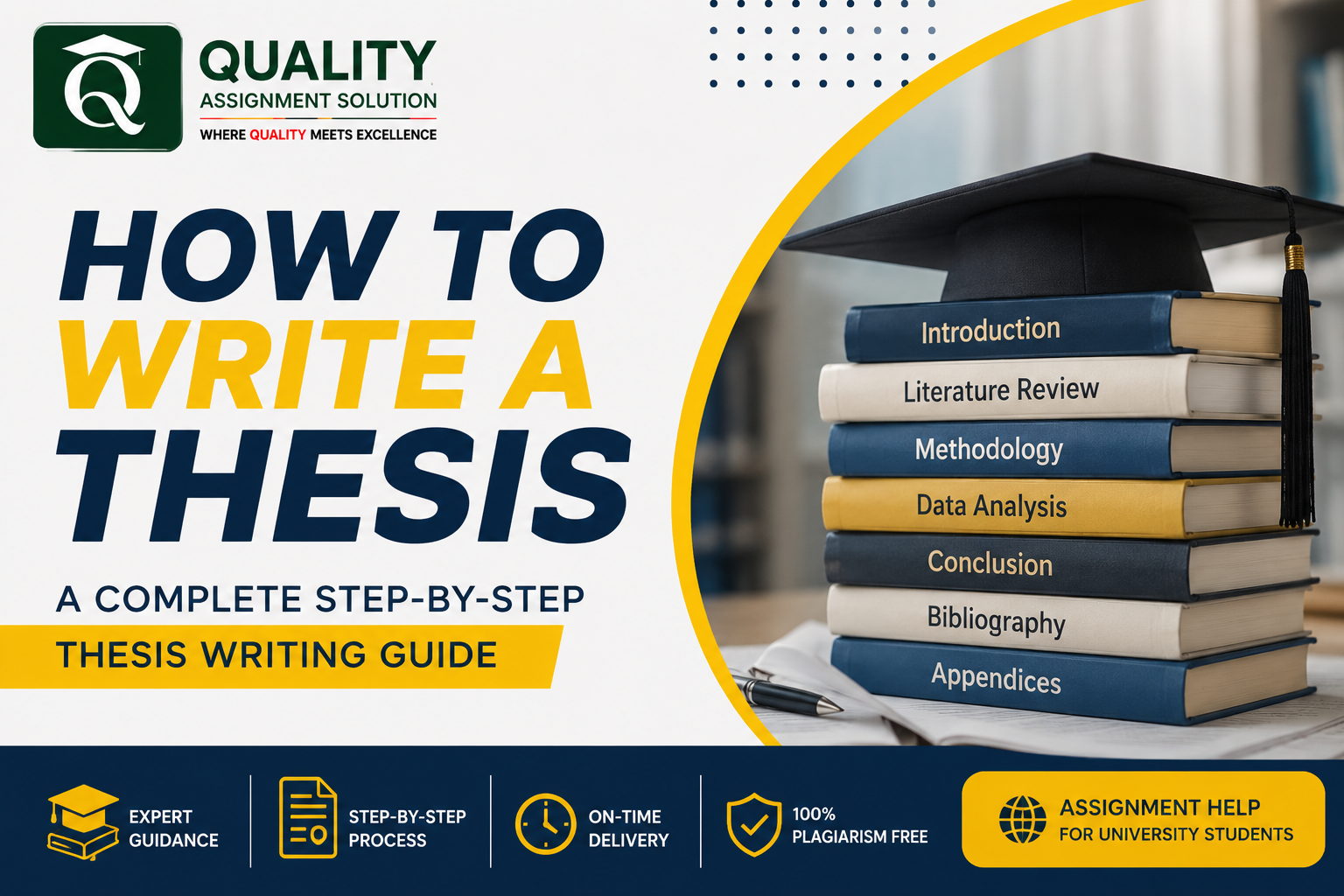
How to Write a Thesis
First, it is important to understand what a thesis means before learning how to write one. In simple terms, a thesis is a long academic paper based on personal research. Students usually complete a thesis as part of a university degree. It is commonly submitted as the final stage of a master’s programme.
A thesis shows a student’s knowledge of a particular field, such as health, management, or another subject. It also demonstrates their analytical and critical thinking skills. Through original research, students can explore a topic and contribute to existing knowledge.
A thesis contains different sections. Each section explains a specific part of the research. Following a proper sequence can make the thesis easier to understand. Many students are not familiar with the correct thesis-writing sequence. As a result, they may miss important information or fail to explain the purpose of their research clearly.
Students are often guided by a professor or supervisor while preparing their thesis. Before starting the writing process, students can conduct detailed research related to their chosen field. Thesis writing is a gradual process, and good research can provide a strong foundation for the writing.
The following sections explain the main steps that can help students understand how to write a thesis.
Introduction
The introduction sets the research topic and presents the research questions. It gives brief information about the selected topic. It also explains the research perspective in a clear way. This section provides an overview of the research and briefly explains how the evidence supports it. It can answer important questions such as what the research is about, why the research is being conducted, and how the research will be carried out.
Before starting the introduction, students can decide the format of their thesis. This may include the thesis title, university name, submission date, supervisor’s name, and programme details.
An abstract is also included to provide a short summary of the research and its findings. A table of contents can make the thesis easier to navigate. It usually includes the different chapters and their page numbers. Students can also decide on line spacing, font size, and referencing style before beginning their thesis.
Literature Review
The literature review summarises previous research and explains where the student’s research fits within the existing academic work. It provides an understanding of the research already available on the selected topic.
Students can begin by selecting appropriate sources. They can then consider the credibility of these sources and evaluate them carefully. The section can also show connections between different sources, including gaps, patterns, and themes.
A literature review is not only a summary of previous research. It can also provide a justification for the student’s research. This may include addressing a research gap, developing conclusions from existing knowledge, exploring a new methodological or theoretical approach, or introducing a possible solution to an unresolved issue.
Theoretical Framework
The theoretical framework is different from the literature review. It identifies the theories and concepts that support the research. This section explains and evaluates the theories on which the research is based. It can help readers understand the academic foundation of the study.
Methodology
The methodology section explains how the research was conducted. Students can describe the methodological approach used in their research and explain why they selected it. This section commonly includes qualitative or quantitative approaches. It can also explain the research methods and data collection techniques used by the student. These methods may include interviews, surveys, or other forms of data collection. Students can also mention any materials, tools, or computer software used during the research.
Data Analysis
The data analysis section explains how the collected data is analysed. Students can describe the selected method and explain why it is suitable for their research. Different methods can be used for data analysis. These may include statistical analysis, discourse analysis, and other suitable approaches.
Students can provide a clear justification for their selected method. They can also include supporting materials, images, and relevant figures with appropriate references. These materials can help readers understand the research results more clearly.
Expected Outcomes and Implications
This section provides an interpretation of the expected or obtained research results. It can explain whether the results meet the expectations of the research. Students can also explain how their findings fit within the framework developed for the study. Related academic sources can be used to place the research results within the selected field.
Conclusion
The conclusion brings together the important points of the research. It can answer the main research questions and provide the final statements based on the study. A good conclusion can strengthen the main ideas of the research. It can also restate the thesis statement and discuss the implications of the study. Students can also suggest possible areas for future research. Innovative ideas and further research opportunities can be discussed where relevant. The thesis can then finish with a suitable concluding statement.
Bibliography
The bibliography contains the references used during the research. Students need to follow the referencing style required by their university or academic field. Common referencing styles include Harvard, APA, and MLA. All research sources used in the thesis should be included in the reference or bibliography section. Students can select the required citation style and use it consistently throughout the thesis.
Appendices
The appendix section is optional. However, many universities may recommend including it when additional research material is relevant. Appendices can contain supporting materials used during the research. These may include survey questions, interview transcripts, or other important documents. Adding this material to the appendix can keep the main body of the thesis easier to read. It also allows students to provide additional information without making the main chapters unnecessarily long.
Thesis Writing Assistance
If you need thesis writing assistance, you can visit our website. Our team is available 24/7 to provide academic writing support. Our assignment writing services are available at affordable prices. We also provide AI-free and plagiarism-free academic writing assistance. You can contact our team to discuss your thesis or assignment requirements and get suitable support for your academic work.